
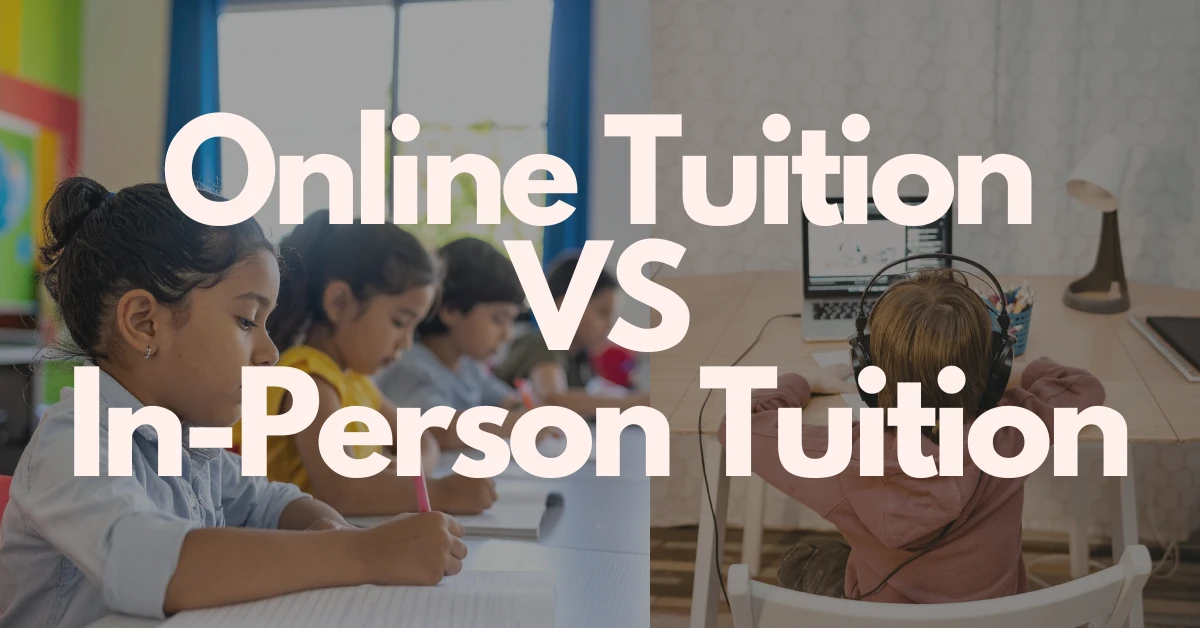
Is Online Maths Tuition as Effective as In-Person? What the Evidence Says
This is one of the most common questions parents ask before registering for online tuition — and it deserves an honest answer. The short answer is: for maths specifically, online tuition delivered with the right platform and by a qualified teacher can be at least as effective as in-person tuition. But effectiveness depends heavily on how the online lessons are structured. This article explains why, and what to look for.
The Case for Online Maths Tuition
Interactive Whiteboards Make the Difference
The misconception that online lessons are just video calls with a teacher talking at a screen is outdated. High-quality online maths tuition uses interactive whiteboard platforms where the teacher can write, annotate, draw diagrams, and work through problems in real time — just as they would on a physical whiteboard. Students can write on the board too, so the session is genuinely two-way. For maths — a subject that is taught through worked examples and visual reasoning — this makes online delivery functionally equivalent to being in the same room.
Access to Specialist Teachers
Online delivery removes geographical constraints. A family in rural Shropshire can access a specialist 11+ Maths tutor based in London. A family in the UAE can access the same UK-qualified teachers as a family in Surrey. This matters because specialist subject knowledge — particularly for 11+ and GCSE preparation — is not evenly distributed geographically.
Reduced Commute Stress
For children who are already tired after a school day, removing the commute to and from a tutoring centre means they arrive at their lesson fresher and more focused. This is a genuine and often underestimated benefit — particularly for students who have long school days or significant extracurricular commitments.
An Honest View: Where In-Person Has Advantages
We believe in honest communication with parents, and it’s worth acknowledging that some children genuinely benefit more from in-person tuition — at least initially. For students who struggle significantly with self-regulation, who are easily distracted at home, or who have learning differences that make the physical presence of a teacher important for engagement, in-person may be the better starting point.
However, this is less about the medium and more about how the sessions are structured. Well-designed online tuition addresses these concerns directly:
- Homework and accountability — structured weekly homework sent and tracked through a members area provides the accountability that some students need.
- Regular check-ins — small group and one-to-one online lessons allow the teacher to notice when a student is disengaged and redirect them immediately.
- Parent visibility — parents can choose to sit near their child during online sessions, particularly for younger students, which provides an added layer of support.
What We See in Our Own Teaching
In our experience, children adapt to online learning faster than parents expect. We’ve consistently observed that students who are initially hesitant about online lessons — particularly those who have only experienced classroom or in-person teaching — typically settle in within one or two sessions and engage fully. The interactive whiteboard captures their attention, the structured lesson format gives them something to focus on, and the reduced social anxiety of not being in a room with peers often means quieter students participate more confidently than they do in-person.
For students who join us from abroad or from areas without local specialist maths tutors, online tuition isn’t just as good as in-person — it’s the only realistic option for accessing qualified, specialist teaching. And the outcomes we see are consistently strong.
If you’d like to experience our online teaching for yourself, register for our GCSE or 11+ Maths tuition and see the difference expert online teaching makes.